.png?fit=max&auto=format&n=VrRd9ylcA_lbpmt6&q=85&s=4eb75c6784eda09d9cdee2d5224ca0e8)

config.yml and menu/gui.yml. These files control the backend systems, RPG formatting rules, and the layout of the in-game menus.
Looking for the full default code templates? Check out the complete, downloadable versions by running the jar.
1. Main Configuration (config.yml)
The config.yml is the brain of the plugin. It dictates where custom items are stored, how your server’s RPG lore is formatted, and integrates with external services like Discord.
1.1 Database Selection
SentryLore needs a place to store all the custom legendary items you register using/lore save.
- Which database should I use? If you run a single survival/factions server, use H2. It’s fast, embedded, and requires zero setup. If you run a network (e.g., multiple servers connected via BungeeCord/Velocity) and want items to sync across them, you must use MYSQL.
1.2 RPG Formatting & Rarities
This is where the magic happens. You can completely customize the visual aesthetic of the lore engine here.Visual Formatting Rules
Visual Formatting Rules
Control the symbols and colors injected into the vanilla items.
String
required
The bullet point character added before an item’s display name.
String
required
The character injected next to attributes like Attack Damage.
HEX String
required
The color applied to the actual numeric values of stats (e.g., the “7” in “+7 Attack Damage”).
Rarity Gradients
Rarity Gradients
SentryLore uses Hex Gradients to make items pop. You can define the start and end colors for every rarity tier.
Material Categories
Material Categories
The backend engine uses string matching to categorize items automatically. You can add your own custom item strings or modded items here!
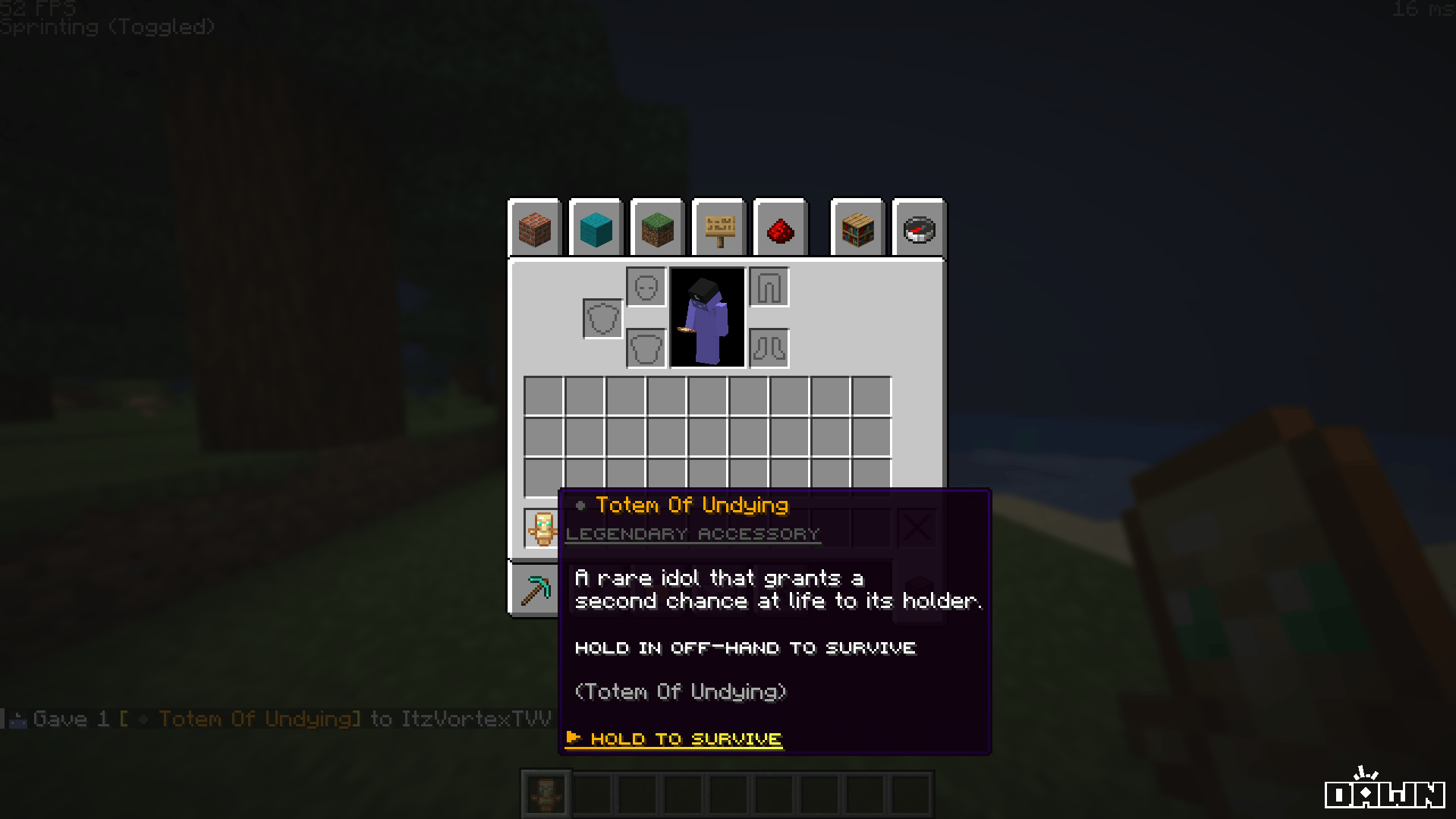
1.3 Discord Logging
To keep track of when administrators spawn in legendary items or wipe the database, you can hook SentryLore directly into a Discord channel.- “Why aren’t logs sending?” Double-check that
enabled: trueand that the URL is a valid Discord webhook string (not a channel link).
2. Interactive Menus (menu/gui.yml)
SentryLore includes several interactive GUIs (Admin Menu, Registry Menu, Settings Menu). All of these are highly customizable via the menu/gui.yml file.
2.1 Modifying Menu Items
You can safely modify the items placed inside the menus, their slots, and their lore. For example, in the Admin GUI: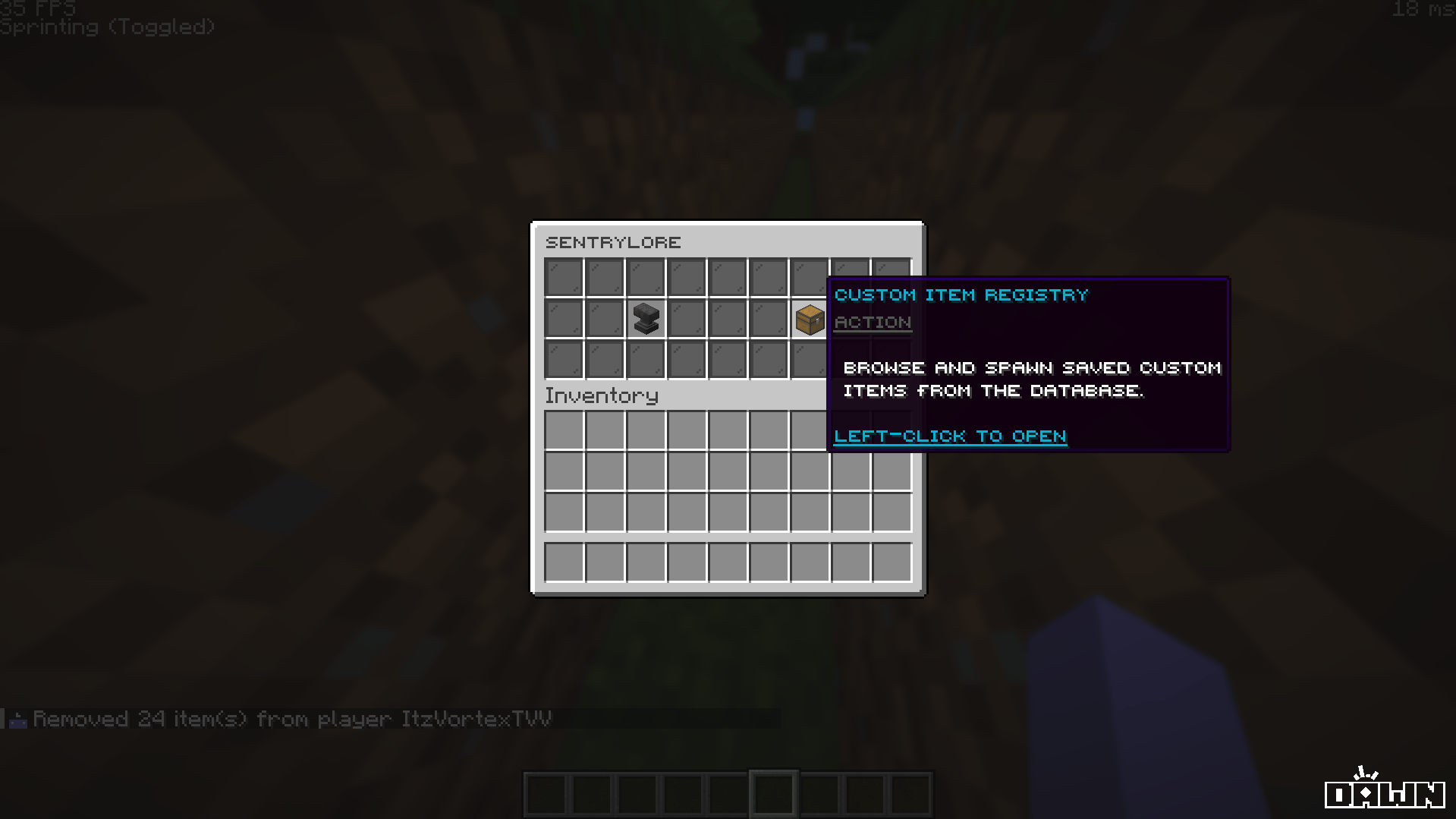
If you break the
restart the server (or run
gui.yml file and the menus stop opening, you can simply delete the file and restart the server (or run
/lore reload) to let the plugin generate a fresh copy.